Entrée
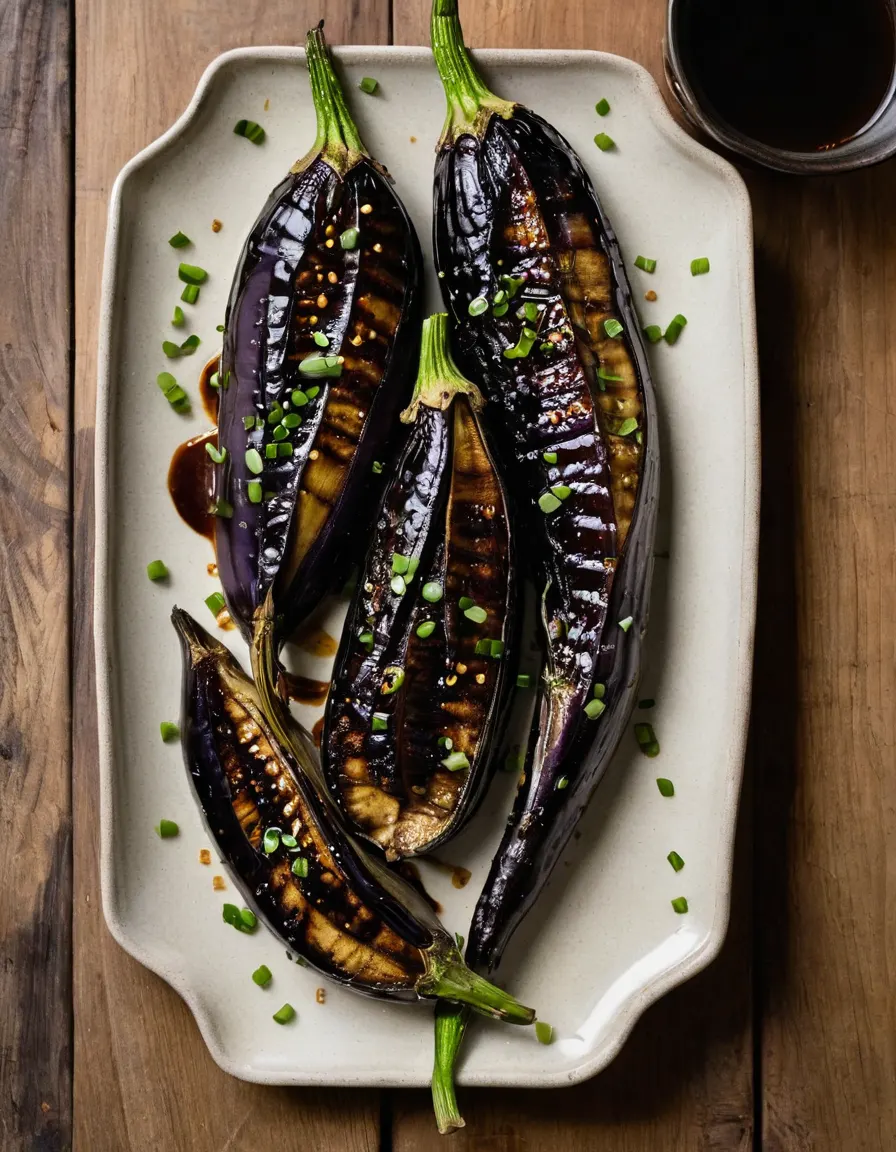
Miso-Glazed Eggplant
Broiler-charred eggplant under a sweet-savory miso glaze. Meatless, and nobody will ask why.
Ingredients · 4 servings
| 2 whole | eggplant grow it ↗ |
| 3 tbsp | white miso paste |
| 1 tbsp | brown sugar · pantry |
| 1 tbsp | rice vinegar · pantry |
| 0.25 bunch | scallions grow it ↗ |
| neutral oil · pantry | |
| kosher salt · pantry |
Method
- Halve eggplants lengthwise, score the cut flesh in a tight crosshatch, salt, and let sit 15 min. Pat dry.
- Brush with oil, broil cut-side up until the flesh is deeply browned and tender, 10-12 min.
- Whisk miso, brown sugar, and rice vinegar into a glaze. Brush over the eggplant.
- Broil 2-3 min more until the glaze bubbles and chars in spots. Top with scallions.
The Why · No Anecdotes
The science, not a story about my childhood.
Why salt the eggplant before cooking it?
Eggplant flesh is spongy and holds a lot of water. Salting draws some of it out by osmosis before it hits the heat, so the flesh browns and caramelizes under the broiler instead of steaming in its own moisture.
Why does a miso glaze work so well here?
Miso is fermented soybean paste, and fermentation breaks proteins down into free glutamates — the compounds behind savory, umami depth. Combined with sugar that caramelizes fast under a broiler, it turns a vegetable with a fairly neutral flavor into something that tastes deliberately rich.
Why crosshatch the cut side?
Scoring roughly doubles the surface area exposed to the broiler and gives the glaze somewhere to sit and cling instead of running off. It also opens channels for steam to escape as the flesh cooks, which is part of why it browns instead of turning to mush.
Suggested sides — swap freely