Entrée
Skillet Chicken Thighs, Charred Green Beans and Almonds
Crispy-skinned chicken thighs and blistered green beans, finished with toasted almonds and lemon — one skillet, dinner in 35 minutes.
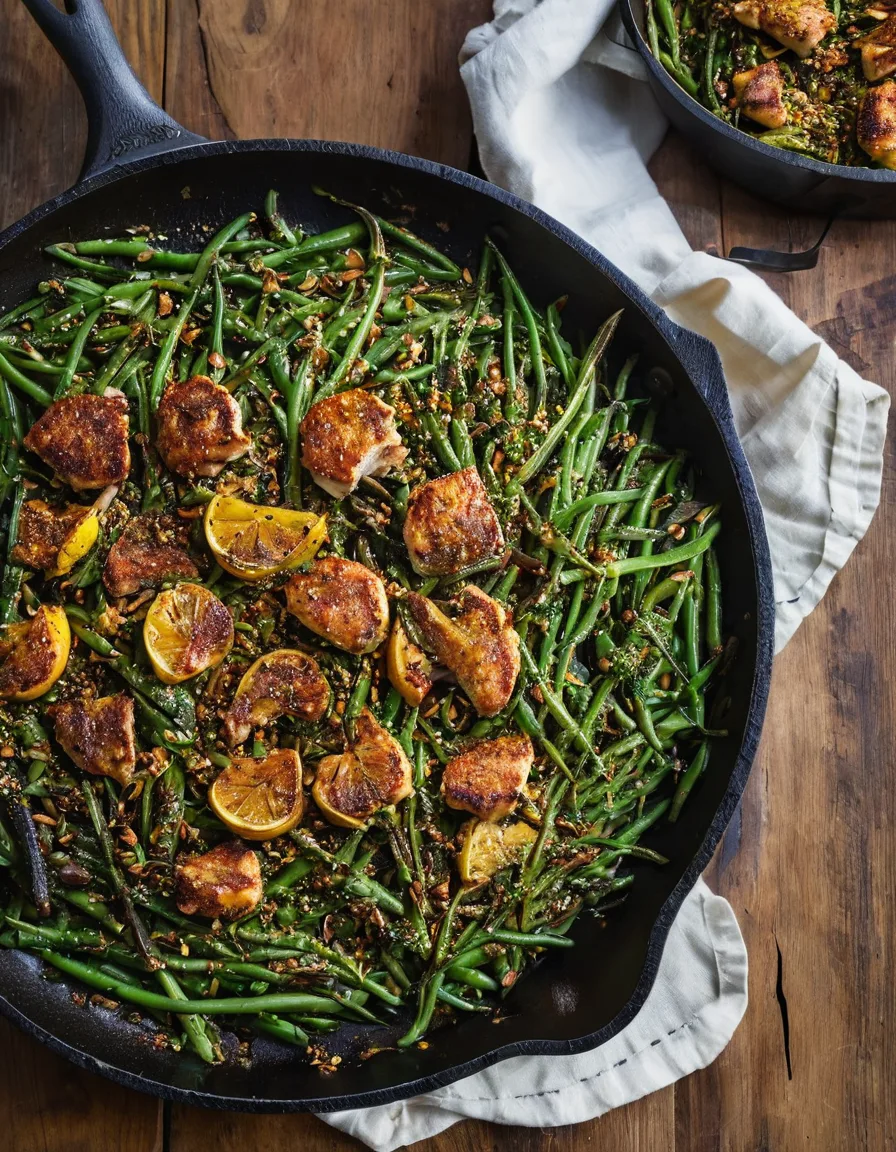
Ingredients · 4 servings
| 4 each | bone-in, skin-on chicken thighs |
| 1 lb | green beans grow it ↗ |
| 3 cloves | garlic grow it ↗ · pantry |
| 0.33 cup | sliced almonds |
| 1 each | lemon |
| 1 tbsp | olive oil · pantry |
| 1 tsp | kosher salt · pantry |
| 0.5 tsp | black pepper · pantry |
| 0.25 tsp | red pepper flakes · pantry |
| 2 tbsp | flat-leaf parsley grow it ↗ |
Method
- Pat chicken thighs dry and season both sides with salt and pepper.
- Heat a large skillet over medium heat. Add thighs skin-side down and cook undisturbed for 8-10 minutes, until skin is deeply golden and most of the fat has rendered.
- Flip and cook 6-7 minutes more, until internal temperature hits 165°F / 74°C. Transfer chicken to a plate, leaving the fat in the pan.
- Add sliced almonds to the rendered fat and toast 1-2 minutes, stirring, until golden. Scoop out onto a small plate.
- Add garlic to the same fat and stir 30 seconds until fragrant. Add green beans, toss to coat, and spread in an even layer.
- Cover and cook 4 minutes to steam, then uncover and cook 3-4 minutes more, stirring occasionally, until beans are blistered and browned in spots.
- Off heat, stir in red pepper flakes, lemon zest, and half the lemon juice. Return chicken to the pan to warm through.
- Scatter almonds and parsley over the top, drizzle with remaining lemon juice, and serve straight from the skillet.
Nutrition · per serving
Estimated from this recipe's ingredients, not lab-measured — not a substitute for professional dietary advice.
Advertisement
The Why · No Anecdotes
The science, not a story about my childhood.
Why cook chicken skin-side down for so long before flipping?
Chicken skin is mostly fat and connective tissue. Slow, steady contact with a medium-hot pan gives the fat time to render out and the collagen time to convert to gelatin, which is what makes skin crisp instead of rubbery. Flip too soon and you trap unrendered fat under a soft, pale surface.
Why cover the pan for part of the green bean cooking?
Covering traps steam that cooks the beans through quickly without burning the fat underneath. Uncovering afterward lets surface moisture evaporate so the beans can actually brown and blister instead of just steaming limp.
Suggested sides — swap freely