Entrée
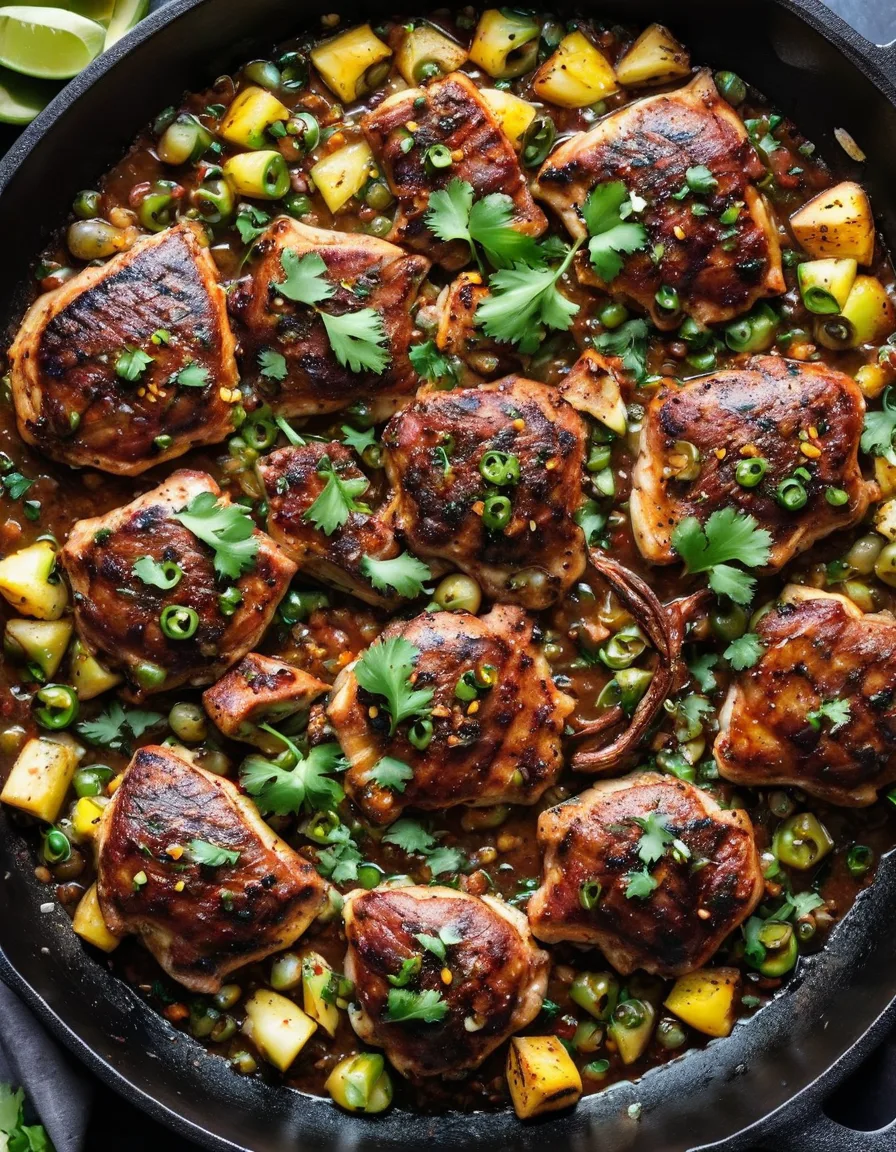
Skillet Jerk Chicken Thighs, Charred Pineapple Salsa
Spice-rubbed chicken thighs seared crisp, topped with pineapple charred in the same fat.
Ingredients · 4 servings
| 1.5 lb | boneless, skin-on chicken thighs |
| 1 tsp | kosher salt · pantry |
| 1 tsp | ground allspice · pantry |
| 1 tsp | dried thyme · pantry |
| 0.5 tsp | cayenne pepper · pantry |
| 1 tsp | garlic powder · pantry |
| 1 tbsp | brown sugar · pantry |
| 0.5 tsp | black pepper · pantry |
| 1 tbsp | olive oil · pantry |
| 4 piece | fresh pineapple rings |
| 0.25 cup | red onion |
| 1 whole | jalapeno grow it ↗ |
| 0.25 cup | cilantro grow it ↗ |
| 1 whole | lime |
Method
- Pat chicken thighs completely dry. Mix salt, allspice, thyme, cayenne, garlic powder, brown sugar, and black pepper; rub all over the chicken, working some under the skin.
- Heat olive oil in a large skillet over medium-high. Lay chicken skin-side down and press flat; sear undisturbed 6-7 minutes until the skin releases and turns deep mahogany.
- Flip and cook 6-8 minutes more until an instant-read thermometer reads 165F at the thickest part. Transfer chicken to a plate.
- Without wiping the skillet, lay pineapple rings in the rendered fat over medium-high heat. Cook 2-3 minutes per side until deeply charred at the edges.
- Chop the charred pineapple and toss in a bowl with red onion, jalapeno, cilantro, and lime juice; season with a pinch of salt.
- Spoon the pineapple salsa over the chicken and serve immediately.
Nutrition · per serving
Estimated from this recipe's ingredients, not lab-measured — not a substitute for professional dietary advice.
Advertisement
The Why · No Anecdotes
The science, not a story about my childhood.
Why char the pineapple in the same skillet instead of using it raw?
Rendered chicken fat left in the pan carries fond, the browned proteins and spice residue from searing. When pineapple hits that hot fat, its natural sugars caramelize fast, a Maillard and caramelization combo, while soaking up the savory fond, turning a sweet fruit into something that reads as a cooked component of the dish rather than a raw garnish.
Why rub spices directly under the skin, not just on top?
Chicken skin is largely fat and doesn't absorb a dry rub well from the outside, most of that seasoning would just burn off or fall away during searing. Working the rub between skin and meat puts it in direct contact with muscle fibers, where it can actually flavor the meat as it cooks.
Suggested sides — swap freely