Entrée
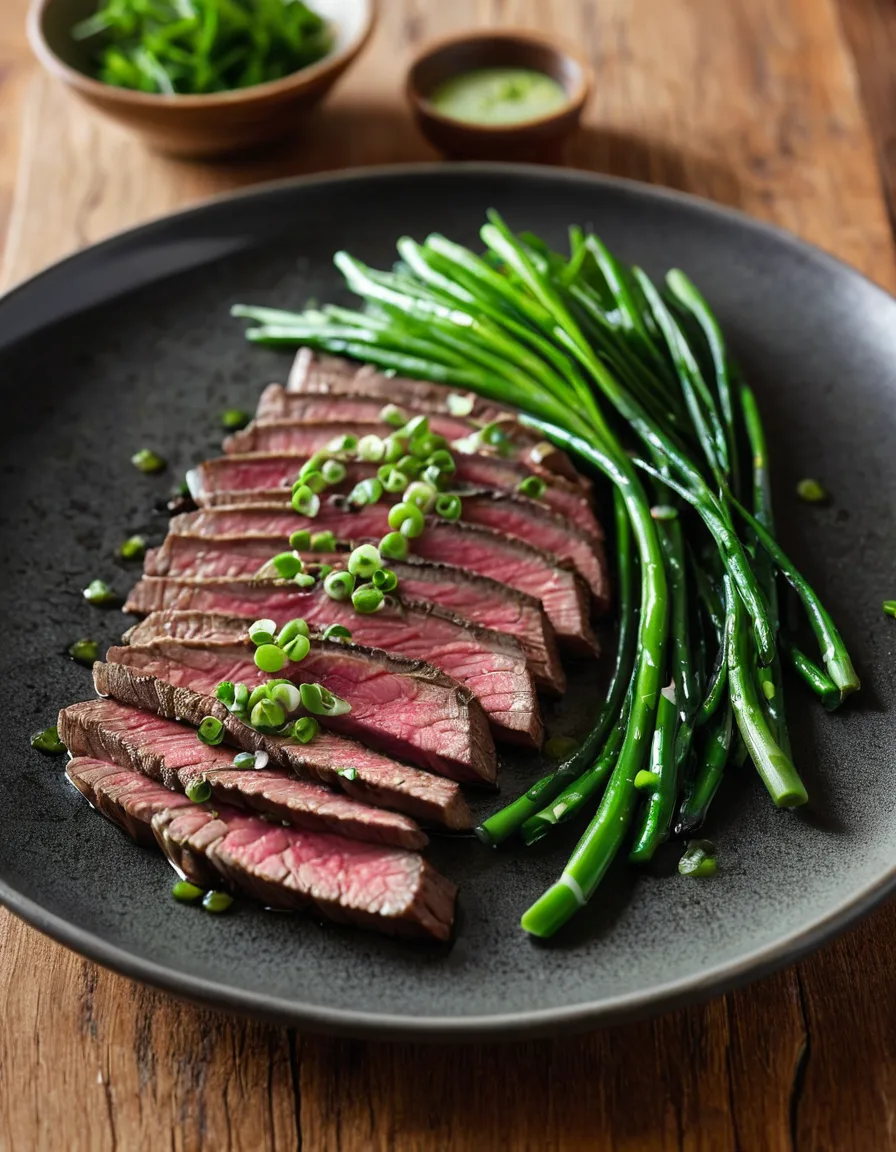
Seared Flat Iron Steak, Ginger-Scallion Sauce
A quick-sear steak dinner finished with a hot-oil ginger-scallion sauce - steakhouse flavor, one skillet, 25 minutes.
Ingredients · 4 servings
| 1.5 lb | flat iron steak |
| 6 each | scallions grow it ↗ |
| 2 tbsp | fresh ginger grow it ↗ |
| 2 clove | garlic grow it ↗ |
| 5 tbsp | neutral oil · pantry |
| 2 tbsp | soy sauce · pantry |
| 1 tbsp | rice vinegar · pantry |
| 1 tsp | toasted sesame oil · pantry |
| 1 tsp | kosher salt · pantry |
| 0.5 tsp | black pepper · pantry |
Method
- Pat the steak completely dry and season both sides generously with salt and pepper.
- Heat 2 tbsp neutral oil in a heavy skillet over high heat until just smoking. Sear the steak 3-4 minutes per side, until an instant-read thermometer reads 145F / 63C at the thickest point.
- Transfer steak to a cutting board and rest at least 3 minutes before slicing - this lets juices redistribute instead of running out onto the board.
- While the steak rests, pile the sliced scallions, ginger, and garlic in a heatproof bowl. Add soy sauce and rice vinegar.
- In a small saucepan, heat the remaining 3 tbsp oil until it shimmers and just starts to smoke. Carefully pour it over the scallion-ginger mixture - it will sizzle hard and turn fragrant.
- Stir in the sesame oil. Slice the rested steak thinly against the grain and spoon the ginger-scallion sauce generously over the top.
Nutrition · per serving
Estimated from this recipe's ingredients, not lab-measured — not a substitute for professional dietary advice.
Advertisement
The Why · No Anecdotes
The science, not a story about my childhood.
Why pour hot oil over raw aromatics instead of just sauteing them?
Oil heated past its smoke point rapidly cooks the surface of the ginger, garlic, and scallion on contact, triggering the Maillard reaction and releasing their volatile aromatic compounds into the oil itself. This gives you both raw-bright and toasted-savory notes in one sauce, which a slow saute would flatten into just one register.
Why slice steak against the grain?
Muscle fibers run in one direction, and cutting parallel to them leaves long, chewy strands intact. Slicing perpendicular to the grain shortens those fibers, so each bite requires far less chewing to break apart, making the meat taste more tender even though the cooking hasn't changed at all.
Suggested sides — swap freely