Entrée
Seared Strip Steak, Blistered Tomato-Balsamic Pan Sauce
Cast-iron seared strip steak with a fast pan sauce of blistered cherry tomatoes, balsamic, and basil.
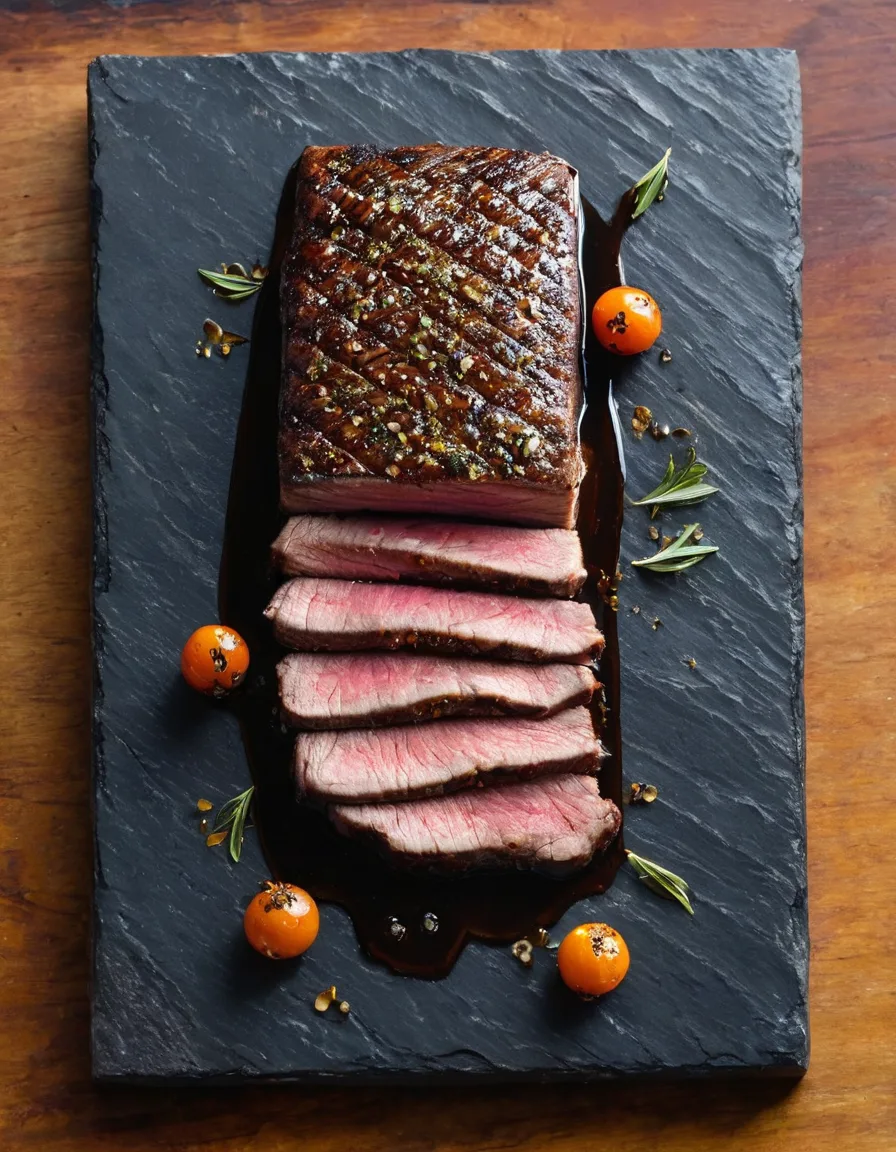
Ingredients · 4 servings
| 1.5 lb | New York strip steaks |
| 1 tsp | kosher salt · pantry |
| 0.5 tsp | black pepper · pantry |
| 2 tbsp | olive oil · pantry |
| 2 cup | cherry tomatoes grow it ↗ |
| 3 clove | garlic grow it ↗ |
| 2 tbsp | balsamic vinegar · pantry |
| 2 tbsp | unsalted butter · pantry |
| 0.33 cup | fresh basil grow it ↗ |
Method
- Pat steaks dry and season generously with salt and pepper on both sides; let sit at room temperature 15 minutes.
- Heat olive oil in a heavy skillet over high heat until just smoking. Sear steaks 3-4 minutes per side for medium-rare, until a deep brown crust forms.
- Check internal temperature with a thermometer, pulling steaks at 135°F for medium-rare (they'll rise to 145°F while resting). Transfer to a plate and tent loosely with foil.
- Lower heat to medium. Add cherry tomatoes cut-side down to the same skillet and cook 3-4 minutes until blistered and blackened in spots.
- Add garlic and cook 30 seconds until fragrant. Pour in balsamic vinegar, scraping up the browned bits from the bottom of the pan.
- Remove pan from heat and swirl in cold butter cubes one at a time until the sauce is glossy and slightly thickened.
- Stir in torn basil. Slice rested steak against the grain and spoon the tomato-balsamic sauce over the top.
Nutrition · per serving
Estimated from this recipe's ingredients, not lab-measured — not a substitute for professional dietary advice.
Advertisement
The Why · No Anecdotes
The science, not a story about my childhood.
Why sear at such high heat before saucing?
High heat drives the Maillard reaction, browning proteins and sugars on the surface into hundreds of new flavor compounds. Those same browned bits (fond) left in the pan become the backbone of the sauce once deglazed.
Why pull the steak below your target temperature?
Carryover cooking continues raising internal temperature after heat is removed, driven by residual heat still moving inward from the hot exterior. Pulling steak at 135°F lets it coast up to a safe, rested 145°F without overcooking.
Why add cold butter off the heat instead of melting it in?
Cold butter melts slowly and its milk solids and fat emulsify into the liquid gradually, creating a thick, glossy sauce. Adding it over high heat or all at once causes the fat to separate out instead of binding.
Suggested sides — swap freely